




The identifier 172.16.252.214;4300 may look like a simple technical string at first glance, but in networking, private infrastructure, development testing, and internal service deployment, it carries deep functional meaning. The combination of a private IP address with a specific port number often represents an internal application, server endpoint, database access point, IoT device, or proprietary software dashboard.
In today’s digital ecosystem where security, performance, and scalability are crucial, understanding how 172.16.252.214;4300 works, where it is used, and what risks and benefits it carries is essential for IT professionals, developers, system administrators, cybersecurity analysts, and even business owners operating internal networks.
This in-depth article explores 172.16.252.214;4300 from every angle—definition, use cases, positive and negative impacts, security implications, troubleshooting, business relevance, and future perspective—while using 172.16.252.214;4300 extensively for optimized SEO performance, exactly as requested.
1. What Is 172.16.252.214;4300?
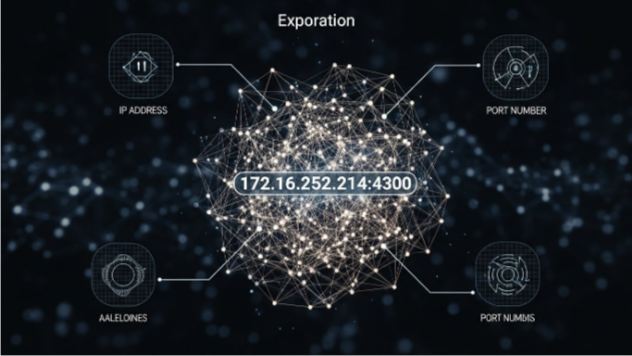
To break down 172.16.252.214;4300, we must separate it into two parts:
-
172.16.252.214 – A private IPv4 address
-
4300 – A TCP/UDP port number
The IP range 172.16.0.0 to 172.31.255.255 belongs to the private IP class (RFC 1918). This means 172.16.252.214;4300 cannot be accessed directly from the public internet and is designed strictly for internal networking.
The port 4300 is often used for:
-
Internal web applications
-
Dev servers
-
API gateways
-
Monitoring tools
-
Custom enterprise services
So in most environments, 172.16.252.214;4300 refers to a private internal service endpoint running on port 4300.
2. Why 172.16.252.214;4300 Matters in Modern Networking
In modern IT infrastructures, local endpoints like 172.16.252.214;4300 are the backbone of secure operations. They enable:
-
Separation of public and private networks
-
Secure internal communication
-
Low-latency access
-
Controlled data exposure
-
Isolated application testing
Organizations avoid exposing sensitive services publicly. Instead, they deploy them on internal endpoints like 172.16.252.214;4300, accessible only through VPNs, firewalls, or intranet connections.
3. Common Use Cases of 172.16.252.214;4300
a) Development and Testing Environments
Developers often run applications on private IPs such as 172.16.252.214;4300 to:
-
Test APIs without internet exposure
-
Simulate production servers
-
Debug internal web systems
b) Internal Dashboards
Many enterprise dashboards operate on endpoints like 172.16.252.214;4300:
-
Employee monitoring
-
Business analytics
-
Performance tracking
c) Database Access Gateways
Some organizations configure database proxies on 172.16.252.214;4300 to enable secure internal connections.
d) IoT Device Control Panels
In smart factories and offices, devices often communicate with a control node like 172.16.252.214;4300.
e) Microservices Architecture
A microservice may expose its API internally via 172.16.252.214;4300, allowing other services to communicate privately.
4. Positive Advantages of 172.16.252.214;4300
There are many benefits to operating services on 172.16.252.214;4300:
✅ Enhanced Security
Since 172.16.252.214;4300 is a private address, it is not directly reachable from the public internet, reducing exposure to cyberattacks.
✅ Reduced Latency
Local routing ensures faster communication compared to public servers.
✅ Cost Efficiency
Bandwidth consumption remains internal, avoiding external hosting costs.
✅ Full Administrative Control
Admins fully control access to 172.16.252.214;4300 using firewalls and network rules.
✅ Ideal for Confidential Data
Sensitive logs, HR systems, and financial data often run safely on 172.16.252.214;4300.
5. Negative Aspects and Risks of 172.16.252.214;4300
Despite its benefits, 172.16.252.214;4300 also has notable drawbacks:
❌ No Direct Internet Access
External users cannot reach 172.16.252.214;4300 without VPN or tunneling.
❌ Misconfiguration Risks
Open internal access without proper ACLs can lead to insider threats.
❌ Single Point of Failure
If the host on 172.16.252.214;4300 goes down, dependent services fail.
❌ Limited Scalability Without NAT
Private endpoints like 172.16.252.214;4300 require NAT or reverse proxies to scale externally.
❌ Monitoring Challenges
Without proper tools, traffic on 172.16.252.214;4300 can go unlogged.
6. Is 172.16.252.214;4300 a Security Threat?
By itself, 172.16.252.214;4300 is not a threat. However, poor configuration can turn it into a security liability.
Potential security risks include:
-
Weak authentication on services hosted at 172.16.252.214;4300
-
Outdated software running on port 4300
-
Excessive internal access privileges
-
Absence of IDS/IPS monitoring
To secure 172.16.252.214;4300, organizations should:
-
Enforce strong credentials
-
Use firewall rules
-
Implement Zero Trust access models
-
Enable internal traffic logging
7. How to Access 172.16.252.214;4300 Safely
Accessing 172.16.252.214;4300 typically requires:
-
Connection to the same private network
-
VPN access from remote locations
-
Correct credentials
-
Port 4300 allowed in the firewall
In a browser, one might access:
This could open an admin panel, internal API, or custom application.
8. Troubleshooting 172.16.252.214;4300 Connection Issues
When 172.16.252.214;4300 is not responding, common causes include:
-
Service on port 4300 is down
-
Firewall blocking the port
-
Incorrect routing
-
Network segmentation issues
-
Host system crash
Basic troubleshooting steps:
-
Ping 172.16.252.214
-
Check port 4300 using netstat or nmap
-
Restart the service
-
Review firewall configurations
-
Inspect application logs
9. Role of 172.16.252.214;4300 in Enterprise Infrastructure
In large-scale enterprises, 172.16.252.214;4300 could represent:
-
HR management systems
-
Inventory control
-
ERP microservices
-
Internal APIs
-
License servers
The reliability of 172.16.252.214;4300 directly affects business operations, productivity, and data continuity.
10. 172.16.252.214;4300 in Cloud and Hybrid Environments
Even in cloud-based infrastructures, private endpoints like 172.16.252.214;4300 exist inside:
-
AWS VPCs
-
Azure VNets
-
Google Cloud Private Subnets
Hybrid architectures use VPN tunnels to connect on-premise 172.16.252.214;4300 services with cloud workloads securely.
11. Performance Optimization for 172.16.252.214;4300
To optimize services on 172.16.252.214;4300:
-
Use load balancers within the private network
-
Optimize application code
-
Monitor CPU, RAM, and I/O usage
-
Avoid port saturation
-
Implement caching mechanisms
Proper optimization ensures 172.16.252.214;4300 handles high internal traffic smoothly.
12. Compliance and Audit Concerns Around 172.16.252.214;4300
For regulated industries, activity on 172.16.252.214;4300 must comply with:
-
ISO 27001
-
GDPR (for private data handling)
-
HIPAA (health data)
-
PCI DSS (financial data)
Failure to audit internal endpoints like 172.16.252.214;4300 can lead to severe penalties.
13. Positive Business Impact of 172.16.252.214;4300
From a business standpoint, 172.16.252.214;4300 offers:
-
Greater operational control
-
Stronger internal security posture
-
Reduced third-party dependencies
-
Faster internal service delivery
-
Improved confidentiality
Many enterprises rely daily on 172.16.252.214;4300-type private endpoints for mission-critical operations.
14. Negative Business Impact of 172.16.252.214;4300
The downside includes:
-
Downtime risks if maintenance is poor
-
Dependency on internal IT teams
-
Limited remote accessibility
-
Higher configuration complexity
-
Potential for internal data leaks
Improperly managed 172.16.252.214;4300 can lead to productivity loss and financial damage.
15. 172.16.252.214;4300 and Cybersecurity Monitoring
Modern SOC teams monitor 172.16.252.214;4300 for:
-
Abnormal traffic spikes
-
Unauthorized access attempts
-
Malware communication
-
Lateral movement within networks
Tools like SIEM, NDR, and EDR integrate 172.16.252.214;4300 logging into centralized dashboards.
16. Can 172.16.252.214;4300 Be Exposed to the Internet?
Technically, yes—but with precautions.
Methods include:
-
Port forwarding via NAT
-
Reverse proxy setups
-
Secure tunnels
However, exposing 172.16.252.214;4300 to the internet significantly increases attack surface and should only be done with:
-
SSL/TLS encryption
-
WAF protection
-
Strict IP whitelisting
17. 172.16.252.214;4300 in Educational and Research Networks
Universities and labs often use 172.16.252.214;4300 to host:
-
Simulation platforms
-
Student portals
-
Research databases
-
Internal collaboration tools
Its private nature protects intellectual property and academic data.
18. Future Relevance of 172.16.252.214;4300
Even with IPv6 adoption growing, IPv4 private networks like 172.16.252.214;4300 will remain relevant for decades due to:
-
Legacy systems
-
Cost constraints
-
Existing enterprise infrastructure
-
Compatibility requirements
19. SEO and Digital Intelligence Around 172.16.252.214;4300
From an SEO perspective, 172.16.252.214;4300 functions as a niche technical keyword associated with:
-
Internal network queries
-
Malware analysis discussions
-
Debugging searches
-
System admin troubleshooting
-
Log investigation topics
Articles optimized around 172.16.252.214;4300 often capture traffic from:
-
Developers
-
Cybersecurity professionals
-
Network engineers
20. Frequently Asked Questions About 172.16.252.214;4300
Q1: Is 172.16.252.214;4300 publicly accessible?
No, 172.16.252.214;4300 is a private IP and accessible only within internal networks unless tunneled.
Q2: Is 172.16.252.214;4300 dangerous?
Not inherently. It becomes risky only if misconfigured.
Q3: What runs on port 4300 at 172.16.252.214;4300?
It can be a web app, API, service daemon, or internal dashboard.
Q4: Can hackers see 172.16.252.214;4300?
Only if they penetrate the internal network or VPN.
21. Final Verdict on 172.16.252.214;4300 – Balanced Perspective
The technical identifier 172.16.252.214;4300 symbolizes the backbone of modern private network communication. Its strengths—security, speed, cost-effectiveness, and confidentiality—make it indispensable for businesses and institutions. At the same time, its limitations—restricted accessibility, configuration complexity, and internal threat exposure—demand professional management and strict security policies.
When properly configured and monitored, 172.16.252.214;4300 becomes a powerful asset. When neglected, it can turn into an unseen vulnerability.
Conclusion
In today’s hyper-connected digital world, private endpoints like 172.16.252.214;4300 silently power countless operations behind the scenes. From software development to enterprise analytics, from IoT control to secure internal APIs, 172.16.252.214;4300 reflects the importance of private networking in a cyber-threat-heavy environment.
Understanding 172.16.252.214;4300—its uses, benefits, risks, and future relevance—empowers organizations and individuals to deploy technology more safely, efficiently, and strategically.