





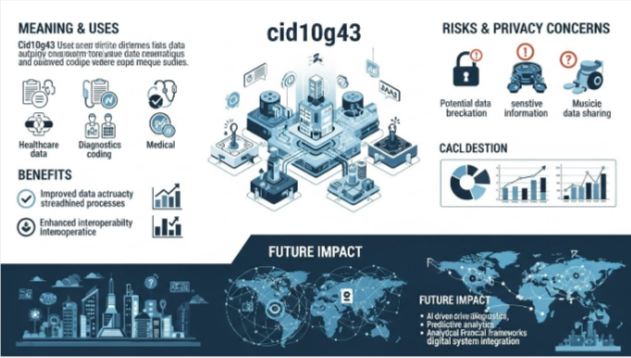
The term cid10g43 has recently begun appearing across different online forums, technical discussions, cybersecurity analyses, and even SEO research communities. While it may look like a random alphanumeric string, cid10g43 is increasingly treated as an identifiable digital reference, token, or code associated with specific online behaviors, system identifiers, or data tracking patterns. As curiosity grows, so does confusion—making it important to examine cid10g43 from both positive and negative perspectives.
This in-depth guide explores what cid10g43 may represent, how it is used, where it appears, its benefits, drawbacks, and the broader implications for users, developers, and businesses. Throughout this article, cid10g43 will be examined from a neutral yet critical lens so readers can form an informed opinion.
What Is cid10g43?
At its core, cid10g43 is believed to function as a unique identifier or reference code. In many systems, identifiers like cid10g43 are used to:
-
Track sessions or customers
-
Tag data packets or digital assets
-
Authenticate requests
-
Organize backend operations
-
Monitor analytics and user behavior
Although cid10g43 does not have a publicly standardized definition, it behaves similarly to a Content ID (CID), asset hash, or tracking string used in modern digital ecosystems.
In positive terms, cid10g43 can be seen as a powerful organizational tool. In negative terms, some critics raise concerns about misuse, lack of transparency, and privacy implications connected to identifiers like cid10g43.
Origins and Possible Meaning of cid10g43
The structure of cid10g43 suggests a few possibilities:
-
CID may stand for “Content ID” or “Client ID”
-
10g may indicate a version, generation, or grouping
-
43 could represent a sequence number or reference index
This formatting is common in:
-
Software logs
-
Cloud services
-
Database indexing
-
Tracking and verification systems
From a positive viewpoint, structured identifiers like cid10g43 allow systems to run faster and more efficiently. From a negative angle, they can also become difficult to trace, explain, or audit when transparency is lacking.
How cid10g43 Is Commonly Used
The usage of cid10g43 can differ based on industry. Below are some of the most common practical contexts where cid10g43-type identifiers are seen.
1. Digital Tracking Systems
Many analytics platforms use codes like cid10g43 to track:
-
User sessions
-
Click behavior
-
Traffic sources
-
Conversion data
Positive sentiment: This helps businesses grow through data-driven decisions.
Negative sentiment: Users often feel tracked without informed consent.
2. Cybersecurity and Network Logs
Network logs may use cid10g43 to tag:
-
User activity
-
API requests
-
Security events
-
Data transfers
Positive: Makes incident response faster and more accurate.
Negative: If compromised, cid10g43 could expose sensitive activity patterns.
3. Software Development and Debugging
Developers rely on identifiers like cid10g43 for:
-
Error tracking
-
Version control
-
Patch management
Positive: Faster bug resolution and stable software.
Negative: If mismanaged, incorrect mapping of cid10g43 can cause system errors.
The Role of cid10g43 in Data Analytics
In modern analytics, cid10g43 functions like a digital fingerprint. Each interaction tied to cid10g43 creates a trail of data:
-
Viewing behavior
-
Device type
-
Location trends
-
Engagement time
Positive Impact in Analytics
-
Accurate performance measurement
-
Better customer profiling
-
Improved personalization
-
More effective marketing campaigns
Negative Impact in Analytics
-
Potential invasion of privacy
-
Risk of data misuse
-
Over-profiling of users
-
Regulatory compliance challenges
Thus, cid10g43 can either be a powerful growth engine or a controversial surveillance marker depending on how it is implemented.
cid10g43 and User Privacy Concerns
Privacy is one of the most debated issues surrounding cid10g43. Although cid10g43 may not store names or personal details directly, it can still be linked to behavioral data.
Positive Privacy Perspective
-
cid10g43 is often anonymized
-
Used only for performance tracking
-
Helps improve platforms without storing personal info
-
Supports secure system monitoring
Negative Privacy Perspective
-
Can be linked across multiple sessions
-
May be shared between third parties
-
Often used without explicit user awareness
-
Risk of deanonymization
This dual nature makes cid10g43 both a technical asset and a privacy risk, depending on governance and regulatory compliance.
Legal and Compliance Aspects of cid10g43
As regulations like GDPR, CCPA, and data-protection laws expand, identifiers such as cid10g43 fall under stricter scrutiny.
Positive Legal Compliance Usage
-
Proper consent management
-
Secure data storage
-
Transparent data use policies
-
Encrypted handling of cid10g43
Negative Legal Risks
-
Improper disclosure of tracking use
-
Unauthorized cross-platform tracking
-
Data breaches exposing cid10g43
-
Regulatory fines and penalties
Organizations using cid10g43 must now invest more in compliance to avoid growing legal risks.
Security Implications of cid10g43
From a cybersecurity perspective, cid10g43 plays a pivotal role in identifying threats and monitoring system health.
Positive Security Benefits
-
Rapid identification of suspicious activity
-
Detailed forensic tracking
-
Automated incident response
-
Reduced system downtime
Negative Security Risks
-
If attackers hijack cid10g43, they can spoof sessions
-
Profiling of user behavior by malicious parties
-
Leakage in unsecured logs
-
Potential entry point for targeted attacks
Therefore, cid10g43 must always be encrypted, segmented, and protected at every stage of the data flow.
SEO and Marketing Relevance of cid10g43
In digital marketing, cid10g43-style identifiers are vital for:
-
Campaign tracking
-
Conversion attribution
-
A/B testing
-
Retargeting
Positive Marketing Effects
-
Higher ROI tracking accuracy
-
Smarter ad optimization
-
Better audience segmentation
-
Personalized engagement
Negative Marketing Effects
-
Ad fatigue due to repeated targeting
-
User distrust due to aggressive tracking
-
Rising ad-blocker adoption
-
Brand reputation risks
When marketers misuse cid10g43, the negative consequences often outweigh the intended performance gains.
Technical Architecture Behind cid10g43
The technical design of cid10g43 usually follows these components:
-
Generation Layer: System creates the ID
-
Storage Layer: Database or session store
-
Transmission Layer: API calls and web requests
-
Processing Layer: Analytics or monitoring tools
-
Security Layer: Encryption, hashing, access control
Positive Technical Strengths
-
High scalability
-
Lightweight data packets
-
Cross-platform compatibility
-
Rapid processing
Negative Technical Weaknesses
-
Single point of failure if centralized
-
Complexity in multi-system integration
-
Risk of ID collisions if poorly generated
-
Maintenance overhead
Ethical Considerations of cid10g43
Beyond technical aspects, the ethical dimension of cid10g43 is equally important.
Positive Ethical Use
-
Helps improve user experience
-
Detects fraud and abuse
-
Supports accessibility improvements
-
Enhances service reliability
Negative Ethical Issues
-
Surveillance without transparency
-
Behavioral manipulation
-
Data monetization without consent
-
Power imbalance between platforms and users
Ethical governance determines whether cid10g43 serves society or exploits it.
Common Misconceptions About cid10g43
Several myths surround cid10g43, which need clarification:
-
cid10g43 is malware – Not inherently true
-
cid10g43 stores personal data directly – Usually false
-
cid10g43 is always dangerous – Context-dependent
-
cid10g43 is illegal by default – Only when used improperly
-
cid10g43 is meaningless – It has technical significance
Misunderstanding cid10g43 often leads to unnecessary fear or, conversely, blind trust.
Advantages of Using cid10g43
From a professional perspective, cid10g43 offers many tangible advantages.
Key Benefits
-
High-precision data tracking
-
Improved system transparency for administrators
-
Faster troubleshooting
-
Smarter automation
-
Enhanced performance analytics
These advantages explain why cid10g43 is widely used across large digital infrastructures.
Disadvantages and Risks of cid10g43
Despite its power, cid10g43 has notable drawbacks.
Key Risks
-
Data leakage
-
Privacy concerns
-
Legal non-compliance
-
Security exploitation
-
User mistrust
Organizations that ignore these risks often face serious financial and reputational damage.
cid10g43 in Emerging Technologies
As technology evolves, cid10g43-type identifiers are becoming even more relevant.
Artificial Intelligence
AI systems use identifiers like cid10g43 to:
-
Track model inference requests
-
Monitor prediction behavior
-
Detect anomalies
Internet of Things (IoT)
In IoT networks, cid10g43 may tag:
-
Devices
-
Sensors
-
Data streams
Blockchain and Web3
Although blockchain favors decentralization, cid10g43-style identifiers are still used in:
-
Off-chain analytics
-
Smart contract monitoring
-
Transaction referencing
In each case, cid10g43 supports innovation—but also expands the surface area for misuse.
Best Practices for Managing cid10g43
To maximize benefits and minimize harm, organizations should follow best practices for cid10g43 management.
Recommended Practices
-
Encrypt all cid10g43 values
-
Limit access through role-based permissions
-
Rotate and expire identifiers regularly
-
Maintain transparent privacy policies
-
Audit all systems using cid10g43
These measures significantly reduce both security and compliance risks.
The Future Outlook of cid10g43
Looking ahead, cid10g43 and similar identifiers will continue to evolve as digital systems grow more complex.
Positive Future Trends
-
Privacy-preserving tracking
-
Encrypted analytics
-
AI-driven anomaly detection
-
Better regulatory alignment
Negative Future Possibilities
-
Increased mass profiling
-
Cross-platform behavioral mapping
-
Greater misuse by malicious actors
-
Rising public distrust of tracking technologies
The future of cid10g43 will depend largely on how responsibly it is governed.
Is cid10g43 Good or Bad?
The answer depends on perspective.
cid10g43 Is Good When:
-
Used transparently
-
Protected by strong security
-
Governed by legal standards
-
Focused on improving user experience
cid10g43 Is Bad When:
-
Used without consent
-
Poorly secured
-
Exploited for manipulation
-
Sold to third parties irresponsibly
Thus, cid10g43 itself is neutral—its impact is shaped entirely by human intent and technical governance.
Practical Examples of cid10g43 in Real Systems
Although specific proprietary implementations remain confidential, real-world systems use cid10g43-like identifiers in:
-
Payment gateways
-
Streaming platforms
-
Cloud hosting services
-
SaaS dashboards
-
E-commerce tracking
Each of these sectors relies heavily on identifiers similar to cid10g43 for stable operations.
Final Thoughts on cid10g43
In today’s data-driven world, cid10g43 represents more than just a random code—it symbolizes the power and risk of digital identification systems. From improving system performance to raising serious privacy questions, cid10g43 sits at the center of modern technological debate.
Positive View:
cid10g43 enhances analytics, security, performance optimization, and system control.
Negative View:
cid10g43 can enable surveillance, data misuse, legal violations, and cybersecurity threats when abused.
Ultimately, the true value of cid10g43 depends on how responsibly it is designed, managed, and regulated. As digital ecosystems expand, understanding and controlling identifiers like cid10g43 will become more important than ever for individuals, businesses, and regulators alike.