





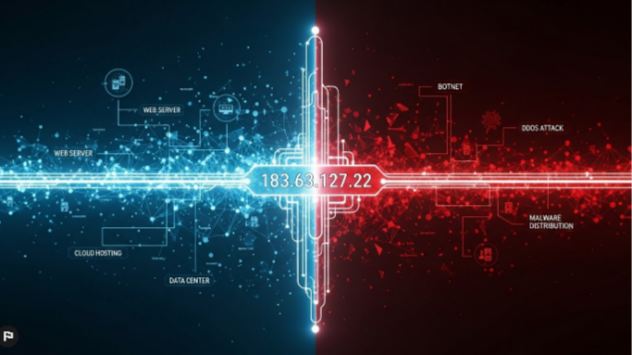
The keyword 183.63.127.22 may look like a simple string of numbers, but in the digital world it represents something far more powerful: an Internet Protocol (IP) address. Every time users encounter 183.63.127.22, they are interacting with a unique numerical identifier that can point to a server, a network device, or even a service provider’s infrastructure. Understanding 183.63.127.22 is important for cybersecurity professionals, website owners, SEO analysts, and even everyday internet users who want to protect themselves online.
In this in-depth article, we will explore 183.63.127.22 from every angle—technical structure, real-world usage, positive and negative implications, privacy concerns, cybersecurity risks, and best practices. By the end, you will have a complete, well-rounded understanding of 183.63.127.22 and why such IP addresses matter in today’s digital landscape.
What Is 183.63.127.22?
At its core, 183.63.127.22 is an IPv4 address. IPv4 addresses are 32-bit numerical labels assigned to devices connected to the internet using the Internet Protocol. These addresses allow computers, servers, smartphones, and routers to locate and communicate with each other efficiently.
When someone types 183.63.127.22 into a browser or sees it in server logs, firewall alerts, or analytics tools, they are dealing with a routing identity used across the global internet. Unlike a domain name (such as example.com), 183.63.127.22 is a raw numerical address that machines use behind the scenes.
Technical Breakdown of the IP Address 183.63.127.22
The structure of 183.63.127.22 follows the standard IPv4 format:
-
183 – First octet, typically representing the broader network range
-
63 – Second octet, narrowing down the subnet
-
127 – Third octet, identifying a specific sub-network
-
22 – Final octet, identifying the specific device or host
Each of these octets ranges from 0 to 255, forming over 4 billion possible IPv4 addresses. 183.63.127.22 is part of that global pool and is routable on the public internet.
Probable Regional Association of 183.63.127.22
Although IP addresses are not fixed to one physical location, 183.63.127.22 belongs to a block typically associated with the Asia-Pacific region, particularly East Asia. However, it is essential to understand that:
-
IP geolocation is approximate, not exact
-
VPNs, proxies, and cloud hosting can mask real locations
-
The same IP like 183.63.127.22 may serve users across multiple countries
This uncertainty is both a positive for privacy and a negative for investigations.
Common Uses of 183.63.127.22
The IP address 183.63.127.22 may be used for several legitimate purposes, including:
-
Web Hosting Services – Hosting websites or web applications
-
Cloud Servers – Supporting SaaS tools and APIs
-
Enterprise Networks – Corporate infrastructure and internal services
-
Data Centers – High-availability servers and load-balanced platforms
-
Remote Access Systems – Secure access points for employees
In many situations, encountering 183.63.127.22 in logs does not indicate anything unusual. It could simply be a normal user, bot, or server performing routine operations.
Positive Sentiments and Benefits of 183.63.127.22
1. Enables Global Connectivity
Without public IPs like 183.63.127.22, the modern internet would not function. Such addresses allow devices across continents to exchange data in milliseconds.
2. Supports Business Operations
Many businesses rely on IP addresses such as 183.63.127.22 to host websites, manage customer data, and run cloud-based tools.
3. Helps in Traffic Monitoring
Network administrators use 183.63.127.22 in log files to track traffic patterns, identify user behavior, and optimize system performance.
4. Improves Digital Traceability
For cybersecurity investigations, 183.63.127.22 can serve as a digital breadcrumb that helps trace suspicious activities and improve security protocols.
5. Facilitates Automated Systems
Automated bots, backup servers, and APIs often operate from IPs like 183.63.127.22, making large-scale automation possible.
These benefits highlight the positive, functional side of 183.63.127.22 as an essential component of internet infrastructure.
Negative Sentiments and Risks Associated with 183.63.127.22
Despite the advantages, 183.63.127.22 can also be associated with serious risks:
1. Potential Cyber Attacks
If 183.63.127.22 appears repeatedly in firewall alerts, it could indicate:
-
Brute-force login attempts
-
DDoS attack participation
-
Port scanning activity
2. Spam and Bot Traffic
Some IP addresses, including 183.63.127.22, might be used by automated bots for:
-
Spamming comment sections
-
Scraping website data
-
Attempting credential stuffing
3. Data Privacy Concerns
Tracking 183.63.127.22 could potentially expose user behavior patterns, raising ethical and privacy issues.
4. Blacklisting Risks
If 183.63.127.22 is used for malicious activity, it may be blacklisted by:
-
Email spam filters
-
Web application firewalls (WAF)
-
Security monitoring platforms
Once blacklisted, even legitimate services using 183.63.127.22 may suffer reputational damage.
183.63.127.22 in Web Server Logs
Webmasters often encounter 183.63.127.22 in:
-
Apache and Nginx access logs
-
WordPress security plugins
-
CDN analytics dashboards
-
Firewall monitoring tools
When 183.63.127.22 appears in logs, administrators typically analyze:
-
Frequency of requests
-
Type of URLs accessed
-
HTTP status codes
-
User-agent strings
This analysis helps determine whether 183.63.127.22 represents a human visitor, a harmless bot, or a potentially malicious actor.
Is 183.63.127.22 Dangerous?
The IP 183.63.127.22 is not inherently dangerous. An IP address is just a numerical label. The danger depends entirely on how it is used.
-
If 183.63.127.22 is hosting a legitimate website → Safe
-
If 183.63.127.22 is sending spam → Risky
-
If 183.63.127.22 is launching cyberattacks → Dangerous
Therefore, context matters more than the number itself.
183.63.127.22 and Cybersecurity Monitoring
Security professionals often set automated rules to flag IPs like 183.63.127.22 when certain thresholds are met, such as:
-
Too many login attempts per minute
-
Repeated access to restricted URLs
-
Abnormal bandwidth usage
-
Known malicious behavioral patterns
Tools commonly used to monitor 183.63.127.22 include:
-
Intrusion Detection Systems (IDS)
-
Security Information and Event Management (SIEM)
-
Web Application Firewalls (WAF)
-
Network packet analyzers
SEO, Crawlers, and 183.63.127.22
From an SEO perspective, 183.63.127.22 may represent:
-
A legitimate search engine bot
-
A third-party backlink crawler
-
A data-mining bot
-
A malicious scraper
If 183.63.127.22 is consuming excessive server resources, it may slow down site performance and negatively impact user experience and rankings. Conversely, if it is a legitimate crawler, blocking it could reduce visibility in search engines.
Legal and Ethical Dimensions of 183.63.127.22
Using 183.63.127.22 for cybercrime may violate multiple international laws regarding:
-
Unauthorized access
-
Data theft
-
Distributed denial-of-service attacks
-
Privacy invasion
Ethically, misuse of IP addresses like 183.63.127.22 undermines trust in digital ecosystems and causes financial and reputational harm to organizations worldwide.
How to Block or Allow 183.63.127.22 Safely
If you identify harmful behavior from 183.63.127.22, you can:
Allow Access If:
-
The traffic is legitimate
-
It belongs to your trusted service provider
-
It supports business operations
Block Access If:
-
It attempts brute-force attacks
-
It generates abnormal traffic
-
It violates your website’s terms of use
Blocking 183.63.127.22 can be done via:
-
Firewall IP rules
-
.htaccess deny directives
-
CDN security dashboards
-
Hosting control panels
VPNs, Proxies, and the Identity of 183.63.127.22
One major complication with 183.63.127.22 is that it may not represent a single individual or organization. It could be:
-
A shared IP used by hundreds of users
-
A rotating proxy endpoint
-
A VPN exit node
-
A cloud service gateway
This makes attribution difficult and sometimes unfair, as blocking 183.63.127.22 could affect innocent users as well.
183.63.127.22 in Digital Forensics
In digital investigations, 183.63.127.22 may appear as:
-
A source IP in a cyberattack
-
A server hosting suspicious content
-
A relay point for malware traffic
Forensic analysts correlate 183.63.127.22 with:
-
Timestamps
-
Log patterns
-
Packet captures
-
User authentication records
This helps reconstruct attack timelines and identify responsible parties.
Advantages of Tracking 183.63.127.22
Tracking 183.63.127.22 offers several advantages:
-
Early detection of attacks
-
Better traffic filtering
-
Improved server performance
-
Enhanced digital accountability
-
Optimized network security policies
These benefits emphasize the positive role of monitoring IP addresses like 183.63.127.22 in modern cybersecurity frameworks.
Disadvantages and Misuse of Tracking 183.63.127.22
On the negative side, over-tracking 183.63.127.22 can lead to:
-
Privacy violations
-
False accusations
-
Unfair blocking of legitimate users
-
Legal liability in certain jurisdictions
This shows that 183.63.127.22 monitoring must be handled carefully and lawfully.
Myths and Misconceptions About 183.63.127.22
-
Myth: 183.63.127.22 always belongs to hackers
Reality: Most IPs serve normal, legitimate purposes. -
Myth: You can pinpoint an exact home address from 183.63.127.22
Reality: IP geolocation is only an approximation. -
Myth: Blocking 183.63.127.22 guarantees safety
Reality: Attackers can easily change IPs.
Best Practices When Dealing With 183.63.127.22
-
Never assume malicious intent without evidence
-
Always analyze behavior, not just the IP
-
Use automated threat-intelligence feeds
-
Maintain updated firewall rules
-
Record and audit all actions involving 183.63.127.22
These best practices ensure a balanced approach to managing 183.63.127.22.
Future of IP Addresses and the Role of 183.63.127.22
With IPv4 exhaustion accelerating, IPs like 183.63.127.22 are becoming increasingly valuable. The gradual shift toward IPv6 will eventually reduce dependency on IPv4, but for the foreseeable future, 183.63.127.22 and similar addresses will remain crucial to global connectivity.
Final Verdict on 183.63.127.22
The IP address 183.63.127.22 is a powerful digital identifier with both positive and negative implications. On the positive side, it enables communication, supports businesses, enhances automation, and strengthens digital infrastructure. On the negative side, it can be exploited for cybercrime, spam, and privacy invasion if misused.
Ultimately, 183.63.127.22 itself is neither good nor bad—it is the human intent behind its use that defines its reputation. By applying proper cybersecurity measures, legal frameworks, and ethical standards, organizations and individuals can safely interact with IP addresses like 183.63.127.22 without unnecessary risk.